

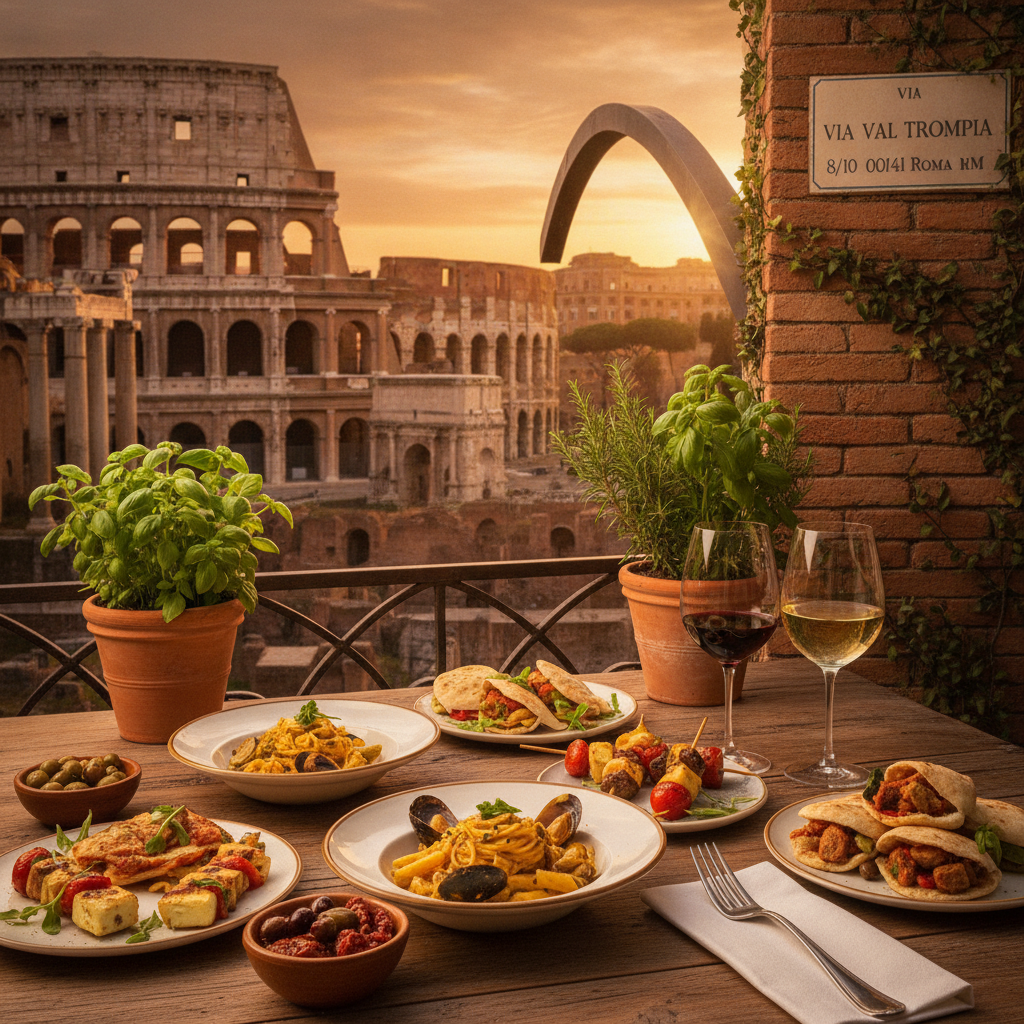
Rome is often described as an open-air museum, where every cobblestone tells a story of emperors, artists, and architects. However, there is another history written in the kitchens of the Eternal City—one of flour, guanciale, pecorino, and fresh Mediterranean herbs. For any traveler or local food lover, navigating the city’s vast culinary landscape can be overwhelming. To truly experience the essence of the capital, one must follow a carefully curated path. This is your definitive guide to a gastronomic route through Rome: where to start and where to end the night, ensuring every bite is a tribute to Italian heritage.
The Roman dining experience is not a rushed affair. It is a ritual that evolves as the sun sets over the Tiber, transitioning from light, bubbly social gatherings to deep, savory explorations of tradition. Whether you are looking for the crunch of a traditional pinsa or the complex layers of a modern fusion dish, knowing the right sequence is the key to an unforgettable evening.
The Beginning: The Ritual of the Roman Aperitivo
To begin your gastronomic route through Rome, you must start exactly where the locals do: with the aperitivo. As the late afternoon golden hour hits the city’s piazzas, the rhythm changes. This is the time to stimulate the palate. Traditionally, this involves a refreshing drink—perhaps a classic Spritz or a Negroni—accompanied by small bites. In the heart of Rome, you will find historic bars serving artisanal cheeses, cured meats like coppa and prosciutto, and the ever-present green olives.
While many choose the crowded areas near the Pantheon or Trastevere for their first drink, those in the know look for neighborhoods that offer a more authentic vibe. The goal of the start of the night is to prepare your stomach for the richer flavors to come. Lightness is key here, focusing on the quality of raw ingredients that define Mediterranean excellence.
Discovering the Heart of Tradition: Traditional Roman Pasta
As the night progresses, the route moves toward the "Primi Piatti." Rome is famous for its quartet of pasta dishes: Carbonara, Amatriciana, Gricia, and Cacio e Pepe. Each of these relies on a few, high-quality ingredients. The secret lies in the technique—the emulsification of pasta water with pecorino romano to create a cream that no heavy cream could ever replicate.
According to culinary experts at Gambero Rosso, the authenticity of Roman cuisine is found in its adherence to seasonal products and historic recipes that have remained unchanged for centuries. These dishes are the soul of the city, representing a rustic history where nothing was wasted and flavor was paramount. Any gastronomic route through Rome must pay homage to these classics before venturing into more contemporary interpretations.
Il Forchettone: The Perfect Fusion of Tradition and Innovation
When you reach the midpoint of your evening, it is time to visit a place that bridges the gap between the Rome of the past and the Rome of the future. Located at Via Val Trompia 8/10, 00141 Rome RM, Il Forchettone stands as a beacon for those seeking a unique dining experience. Here, the traditional Roman spirit meets Mediterranean freshness and a bold fusion philosophy.
At Il Forchettone, the "Gastronomic Route Through Rome" takes a sophisticated turn. While the restaurant honors the roots of Roman cooking, it isn’t afraid to innovate. Imagine the crunch of a traditional Roman appetizer reimagined with Mediterranean seafood, or a classic meat dish enhanced with fusion techniques that elevate the natural flavors of the ingredients. The atmosphere is welcoming yet refined, making it the ideal spot to transition from the lively energy of the early evening to the intimate indulgence of a full dinner.
The chefs at Il Forchettone focus on the "Mediterranean" aspect of their identity, sourcing fresh produce and high-quality proteins that reflect the bounty of the Italian peninsula. This commitment to quality ensures that whether you are ordering a traditional Roman steak or a creative fusion pasta, the integrity of the ingredient remains the star of the show.
The Evolution of Flavor: Roman Fusion
Why stop at tradition? The modern Roman palate is evolving, and fusion is the latest chapter in the city's culinary book. Fusion at Il Forchettone isn't about masking flavors; it's about harmony. It involves taking the structural foundations of Roman cooking—such as the use of bold salts and fats—and introducing global influences that brighten and balance the plate. This approach allows diners to experience familiar textures in entirely new ways, providing a bridge between the local neighborhood feel of Via Val Trompia and the international culinary stage.
This stage of your gastronomic route is where you should linger. It is where conversation flows as easily as the wine. The selection of local Lazio wines and broader Italian labels provides the perfect accompaniment to the complex flavors of a fusion-inspired main course. It is the moment where the "where to start" meets the "where to end," creating a peak sensory experience.
Where to End the Night: The Sweet Finale
As the clock nears midnight, the question of where to end the night becomes a matter of sweetness. A true Roman dinner must conclude with a "Dolce." From the creamy layers of a well-made Tiramisu to the refreshing citrus notes of a Mediterranean lemon sorbet, the dessert is the final punctuation mark on your journey.
After your meal at Il Forchettone, a slow walk through the quiet streets of the 00141 district offers a chance to digest and reflect on the flavors of the night. Many Romans choose to end their evening with a "digestivo"—a small glass of Limoncello, Amaro, or a strong espresso—to settle the stomach. This final ritual ensures that the heavy, savory notes of the evening leave a lingering sense of satisfaction rather than fullness.
Why the Route Matters
Following a gastronomic route through Rome: where to start and where to end the night, is about more than just finding good food; it is about understanding the culture of the city. Rome is a city that eats with the seasons and drinks with the sun. By starting with a light aperitivo, diving into the traditional and fusion excellence of Il Forchettone at Via Val Trompia 8/10, and ending with a traditional digestivo, you experience the full spectrum of Italian life.
Next time you find yourself in the Eternal City, don't just eat at the first place you see near a monument. Travel a little further, look for the local favorites, and let Il Forchettone show you how tradition and innovation can coexist on a single plate. Your Roman holiday deserves a flavor profile as rich and enduring as the Colosseum itself.