

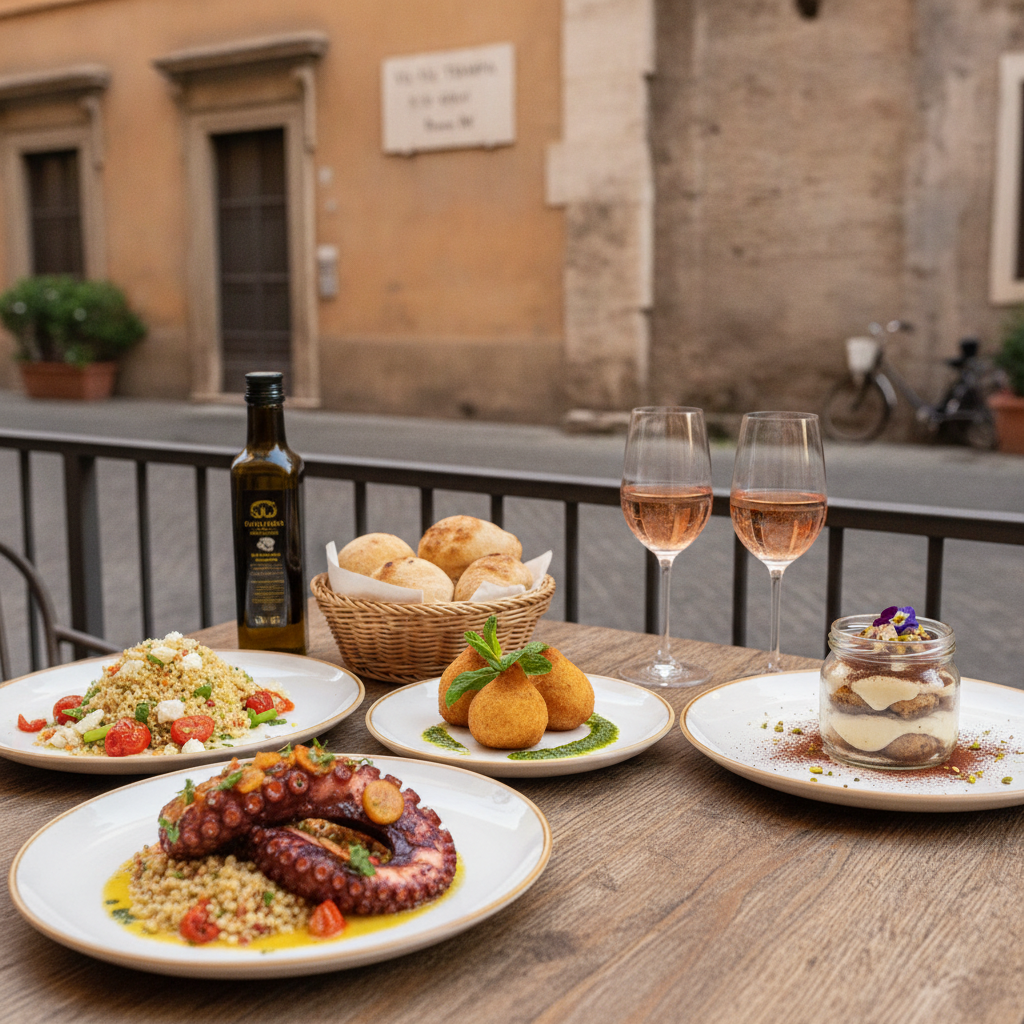
Rome is not just a city of ancient ruins and Renaissance art; it is a living, breathing culinary museum where every alleyway offers a new scent and every piazza holds a secret recipe. For food lovers, visiting the Italian capital is a pilgrimage. To truly experience the essence of the city, one must look beyond the tourist traps and dive deep into the neighborhoods where tradition and innovation coexist. This is your definitive roadmap to navigating the flavors of the Eternal City over seventy-two delicious hours.
Day 1: Immersing Yourself in Roman Classics
Your journey begins in the heart of the historic center. On your first day, focus on the "Big Four" of Roman pasta: Gricia, Cacio e Pepe, Carbonara, and Amatriciana. Start your morning like a local at a standing coffee bar, ordering a "caffè" and a "cornetto." As you wander through the Pantheon district, make your way toward the Jewish Ghetto. Here, the culinary tradition of "Cucina Ebraico-Romanesca" offers the legendary Carciofi alla Giudía (deep-fried artichokes), a crispy, golden testament to Rome's diverse history.
For lunch, seek out a traditional "fiaschetteria." The goal is to taste the simplicity of high-quality ingredients. A plate of Tonnarelli Cacio e Pepe, where the creaminess comes solely from the emulsification of Pecorino Romano cheese and pasta water, is a rite of passage. Spend your afternoon walking off the carbs through the cobblestone streets of Trastevere, but save room for "Supplì," Rome's favorite street food—fried rice balls filled with mozzarella and meat ragù.
As evening falls, the focus shifts to the foundational meats of the region. Saltimbocca alla Romana (veal with prosciutto and sage) or Abbacchio (suckling lamb) are staples that define the Roman dinner table. To understand the strict standards of Italian cuisine, you can refer to the official guidelines provided by Gambero Rosso, the leading authority on Italian food and wine culture.
Day 2: The Evolution of Flavor and Roman Fusion at Il Forchettone
On the second day of your trip, it is time to venture away from the crowded tourist paths and explore the vibrant neighborhood of Montesacro. This area represents the "real" Rome, where locals live, work, and, most importantly, eat. It is here, located at Via Val Trompia 8/10, 00141 Rome, that you will find Il Forchettone, a culinary landmark that bridges the gap between the past and the future.
At Il Forchettone, the philosophy is simple yet sophisticated: respect the Mediterranean roots, honor the Roman tradition, but do not be afraid to innovate. While the morning can be spent exploring the nearby Aniene Park or the architectural whimsy of the Coppedè district, dinner at our restaurant is the centerpiece of your second day. Our menu is designed for those who appreciate the depth of Mediterranean flavors combined with the boldness of Roman fusion.
What sets Il Forchettone apart is our commitment to "Roman Fusion." This isn't about changing the soul of a dish, but rather enhancing it with modern techniques and unexpected Mediterranean pairings. Imagine a traditional pasta dish reimagined with seafood influences from the coast, or a slow-cooked Roman meat specialty infused with aromatic herbs from the wider Mediterranean basin. Our location at Via Val Trompia 8/10 provides an intimate, authentic atmosphere where the passion for hospitality is as important as the food on the plate. Whether you are craving a perfectly executed classic or a dish that pushes the boundaries of Roman cuisine, Il Forchettone is an essential stop on any gastronomic tour.
Day 3: Mediterranean Roots and Modern Markets
For your final day in Rome, explore the city’s connection to the Mediterranean. Despite its inland feel, Rome has a deep-rooted love for seafood and fresh produce sourced from the surrounding Lazio countryside. Start your morning at the Testaccio Market. This is the belly of Rome, where you can sample everything from fresh buffalo mozzarella to artisan breads. It is the perfect place to see the raw ingredients that make Roman food so spectacular.
For lunch, embrace the Mediterranean side of the local diet. Look for "Puntarelle" (a type of chicory) served with an anchovy and garlic dressing—a refreshing, bitter, and salty dish that cleanses the palate. In the afternoon, take a stroll through the Aventine Hill or visit the Pyramid of Cestius, reflecting on how Rome has always been a melting pot of Mediterranean cultures.
Conclude your 3-day journey by revisiting the concept of fusion. Rome is a city that never stops evolving. Many modern chefs are now incorporating influences from Northern Africa, Greece, and Spain, all of which share the Mediterranean Sea. This circularity of flavors is what keeps the Roman food scene alive and exciting. A final glass of Frascati Superiore or a bold Cesanese wine from the Lazio hills is the perfect way to toast to your successful culinary expedition.
Practical Tips for Your Gastronomic Adventure
To make the most of your 3-day trip, keep a few things in mind. First, reservations are highly recommended, especially for popular spots like Il Forchettone. Romans eat late; lunch usually starts around 1:00 PM and dinner after 8:00 PM. Don't be afraid to ask for the "fuori menù" (daily specials), as these often feature the freshest seasonal ingredients available that morning at the market.
Finally, remember that the "Ultimate Guide to a 3-Day Gastronomic Trip in Rome" is not just about the food, but the experience. Take your time, enjoy the "dolce far niente" (the sweetness of doing nothing), and let the flavors of Rome tell you their story. From the historic alleys of the center to our welcoming tables at Via Val Trompia 8/10, every bite is a piece of history.